
Personal Use, Rental, or Both: Deciding What Your Coco Beach Villa Is For

Owning a Panama beach home raises a question nobody asks before they have the keys: what is the home for? A private retreat that sits ready for you and your family whenever you want it? A rental that earns its keep most of the year? Or some hybrid that splits the year between the two?
There is no single right answer. The right answer depends on how often you will actually visit, how you feel about strangers sleeping in your bed, how much management you want to outsource, and what role this asset is meant to play in your wider portfolio.
This article walks through the trade-offs honestly, names the limits of what we can say about returns, and gives you a framework for making the decision rather than a sales pitch for one side of it.
The framing applies to the Coco Beach Community villas specifically, but the logic generalizes to any Pacific-coast Panama home held by a foreign owner.
Start With the Question That Actually Decides It
The single most important variable is not the rental yield. It is the number of weeks per year you will personally use the home.
If you will be in residence for more than half the year a snowbird who spends October through April there, a semi-retired owner who spends most months in Panama the home is fundamentally a residence that happens to have spare weeks. Renting out the spare weeks is decoration on top of personal use.
If you will visit two or three weeks a year a peak holiday, a long weekend or two the home is fundamentally an asset that occasionally hosts you. Whether you rent it is now a different conversation, because the question is what to do with the other 49 weeks.
Most owners are honest with themselves about this number when they sit down and look at their calendar. The mistake is buying as if you will visit for two months and visiting for ten days. The home you buy for ten days a year is not the same home you buy for ten weeks a year.
The Pure-Personal Case
Some owners want the home untouched. The car they keep in the garage is the car they will drive when they arrive. The wine they leave in the cellar is the wine they will open when they get back. The towels are folded the way they left them.
This is a legitimate choice. It is also the most expensive choice per night of use. The carrying cost property taxes, insurance, utilities at standby load, occasional grounds maintenance, the watchman or neighbour who keeps an eye on the place runs whether you are there or not. If you are there for ten days a year, the cost per night is whatever the annual cost is, divided by ten.
For owners with the means to absorb that cost, the pure-personal model has real advantages: zero management overhead, zero rental wear and tear, full schedule flexibility, and the home is genuinely yours in a way that a rental property simply is not. The trade-off is the math.
The Pure-Rental Case
At the other extreme, the home is a business. The owner blocks off two weeks a year for themselves and rents the rest. A property manager handles bookings, cleanings, turnovers, guest communication, and small repairs. The owner sees photographs, receives monthly statements, and visits when the calendar opens.
This model has structural costs. Property management fees in Panama typically run a meaningful percentage of gross rental revenue verify locally; rates vary by region, occupancy, and scope of service.
Maintenance accelerates: renters wear a home faster than owners do, and turnover damage is real. Furnishings depreciate faster. The pool needs more frequent service. The home needs to be fully insured for short-term rental occupancy, which differs from owner-occupied insurance.
We are not going to quote you a yield. The honest reason is that the variables your nightly rate, your booking platform, your management fee, your maintenance reserve, your seasonal mix, the size of the home, the year all swing the answer by enough that any single number printed in an article like this would be misleading.
The operating economics are the owner's own conversation with a property manager and an accountant.
The Hybrid Case (Where Most Owners Land)
Most foreign owners who actually live with a Panama beach home end up running a hybrid. They block their own weeks first the holiday windows that matter to their family and rent out the rest.
The block-out usually centres on the dry season, when the home is most pleasant for personal use, and the rental flow continues around it.
The hybrid model has a logic. It lets the home pay for some of its own carrying cost without forfeiting the personal use that was probably half the reason for buying in the first place.
The trade-off is operational complexity: you are now in the property management business at least part-time, even if the day-to-day is outsourced.
You will have to decide whether to rent through a manager (simpler, lower margin) or directly through booking platforms (more control, more work). You will have to manage your personal weeks against the platform calendar.
The hybrid case is also where the dry season matters most.
The Dry-Season Peak Window
Per the Reside Panama expat guide, Panama's Pacific dry season runs December through April. This is the directional rental peak window for Pacific-coast beach communities: the period when North American and European travel demand is highest, when the weather is most reliably pleasant, and when nightly rates and occupancy are at their strongest.
The rainy season is May through November, with September and October as the wettest months on the Pacific side.
This shapes the hybrid decision. Owners who want to use the home themselves during the dry season are using the home in the same window that would otherwise be the peak rental window. That is the real trade-off — not whether to rent at all, but whether to rent during the months that pay the best.
Some owners take the opposite stance: they personally visit during the rainy season (still warm, fewer crowds, more local feel), and they let the home rent during the dry-season peak. That can be a sensible compromise. It depends entirely on whether the rainy season fits the buyer's own rhythm.
The Maintenance Question
Rental wear is the variable owners underweight. A home that hosts a different family every week ages differently than a home that hosts one family at a low cadence. Towels and linens cycle through commercial laundering instead of careful home washing.
Furniture is sat on by strangers, occasionally moved, occasionally damaged. The kitchen tools get used at a higher rate. The pool surround gets more foot traffic.
None of this is a reason not to rent. It is a reason to budget for it. A rental home needs a higher annual maintenance reserve than a personal-use home.
The FRESH-built villas at Coco Beach were specified for durable wear marine-grade coatings, full structural protection, factory-built tolerances but the soft goods inside the home (linens, kitchenware, the casual furniture in the living room) are the items that need refreshing at a faster cadence in rental use.
Designing for Rental
A home designed from day one for rental performance reads differently than a home that gets retrofitted into a rental later. Things like sleeping capacity, work-from-home accommodation, durable surface choices, and easy turnover layouts all push nightly rates and reviews.
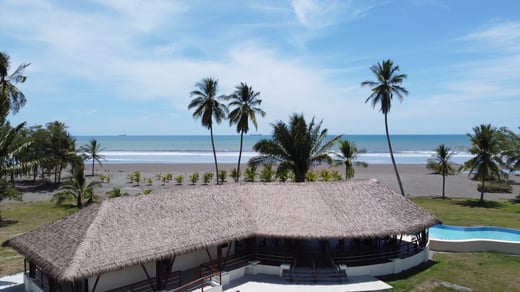
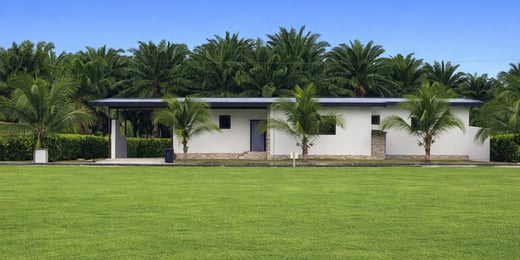
The Coco Beach villas were built with this in mind. Three bedrooms, 2.5 baths, ~210 m², generous outdoor space, the engineering quality to take heavy use without showing wear quickly.
They were not built as rental machines exclusively, but they were designed knowing that a portion of the ownership lifecycle for many buyers will include rental use.
Frequently Asked Questions
When is the peak rental season for a Pacific-coast Panama beach home? The Pacific dry season , December through April per Reside Panama is the directional rental peak window. Demand from North American and European travel is highest in this window, and weather is most reliably pleasant. The exact nightly rates and occupancy vary by year, property, and management; we don't quote specific numbers because the variance is too wide to be useful.
Do I need a Panamanian rental license? Short-term rental regulation varies by region and is evolving. Some municipalities require registration; some types of rental run through different channels. Check the current rules with a Panamanian lawyer or your property manager before you list. Don't rely on what was true two years ago.
What does a property manager typically do? Booking handling, guest communication, key/check-in management, cleaning between guests, maintenance coordination, monthly financial reporting, and often the marketing and listing optimization.Scope varies by manager, as do fees. Get a written contract and a clear breakdown.
Will renting void my insurance? An owner-occupied homeowner's policy and a short-term-rental commercial policy are different products. If you rent, you need the right policy. Tell your insurer; don't surprise them after a claim.
Can I rent the home for part of the year and use it the rest? Yes , most foreign owners do. The decision is which months you block for yourself. Owners who block dry-season months are using the home in the same window that pays the most in rental income; owners who block rainy-season months are taking the opposite trade.
What does rental wear actually look like? Soft goods (linens, kitchenware, casual furniture) cycle faster. Floors and surfaces get more foot traffic. Pool and outdoor areas need more frequent service. The home's structural quality holds up regardless the wear shows in what is replaceable. Budget for a refresh cadence on those items.
See the Villas and Decide What They Will Be for You
The decision is yours, not ours. Walk the Coco Beach Community villas on ChiQworld — including Villa CBV10 look at the layouts with your own calendar in mind, and contact us if you want to discuss which villa fits the way you actually intend to use it.





Comments